

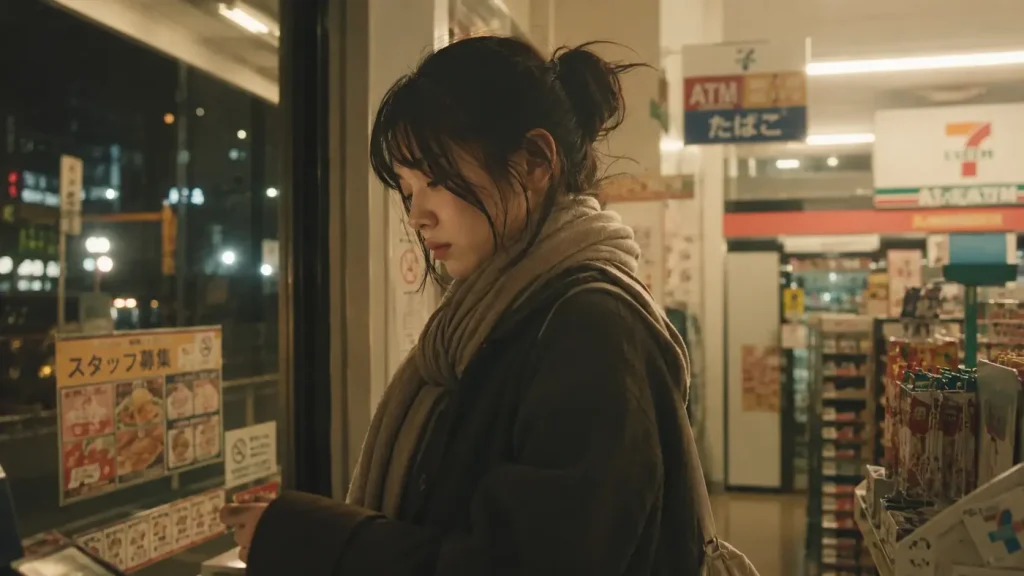
A Quiet Story About Loneliness, Motherhood, and the Pressure to Feel “Normal”
Some books arrive quietly, yet somehow stay inside us much longer than expected. Convenience Store Woman by Sayaka Murata felt exactly like that for me. Beneath its simple story about a woman working in a convenience store, I found something deeper — a quiet reflection on loneliness, identity, emotional exhaustion, and the invisible pressure to live the “right” kind of life. And strangely, while reading Keiko’s story, I found myself thinking about motherhood too… about how easy it is to slowly lose parts of ourselves while trying to become everything for everyone else.
A Quiet Story That Stayed in My Mind Longer Than I Expected
Hallo, it’s Di again 🌿
Recently, I finished reading Convenience Store Woman by Sayaka Murata, and somehow this book stayed in my mind much longer than I expected.
At first, I thought it would simply be a quiet story about a woman working at a convenience store in Japan. Simple, minimal, maybe even a little strange. But the more I read, the more it felt like the book was talking about something deeper — the quiet loneliness that can slowly grow when we spend too much time trying to become the version of ourselves the world accepts more easily.
And honestly, that feeling felt very familiar to me.
Maybe because motherhood has also taught me something similar.
How life can continue normally from the outside while, quietly, parts of ourselves begin changing somewhere deep inside. We continue showing up for everyone. We continue caring, listening, helping, loving. But sometimes, in the middle of all those routines, we slowly lose the space to hear our own thoughts clearly.
That was exactly what I felt while reading Keiko’s story.
Keiko is seen as “abnormal” simply because her life does not follow the expectations society places on women her age. She is unmarried, works part-time for years, and seems emotionally disconnected from the ambitions most people consider important.
But strangely, inside the convenience store, Keiko feels calm. The routines, the sounds, the repetitive rhythm of daily work — they make her feel safe in a way the outside world never fully does.
What I loved most about this book is how quietly it talks about loneliness.
Not dramatic loneliness.
Not loud sadness.
But the kind that quietly settles inside someone while life continues as usual.
And maybe that is why Convenience Store Woman felt so human to me.
Because sometimes loneliness is not about being physically alone.
Sometimes it comes from feeling like your real self no longer has enough room to exist peacefully in the world around you.